Is Owning an ABA Practice Right for You? Here's How to Find Out.
At some point in their careers, many BCBAs begin to wonder what it would look like to run their own practice. Maybe you've experienced firsthand how operational decisions can affect clinical care, or you've found yourself wishing you had more influence over how your organization supports its staff and families.
Whatever sparks the interest, the idea of practice ownership often comes with just as many questions as it does possibilities.
What does it actually take to run an ABA practice? How do you know if you're ready? And how can you determine whether entrepreneurship aligns with your personal and professional goals?
While conversations about practice ownership often focus on independence, flexibility, and the opportunity to build something of your own, there's much more to consider before taking that step.
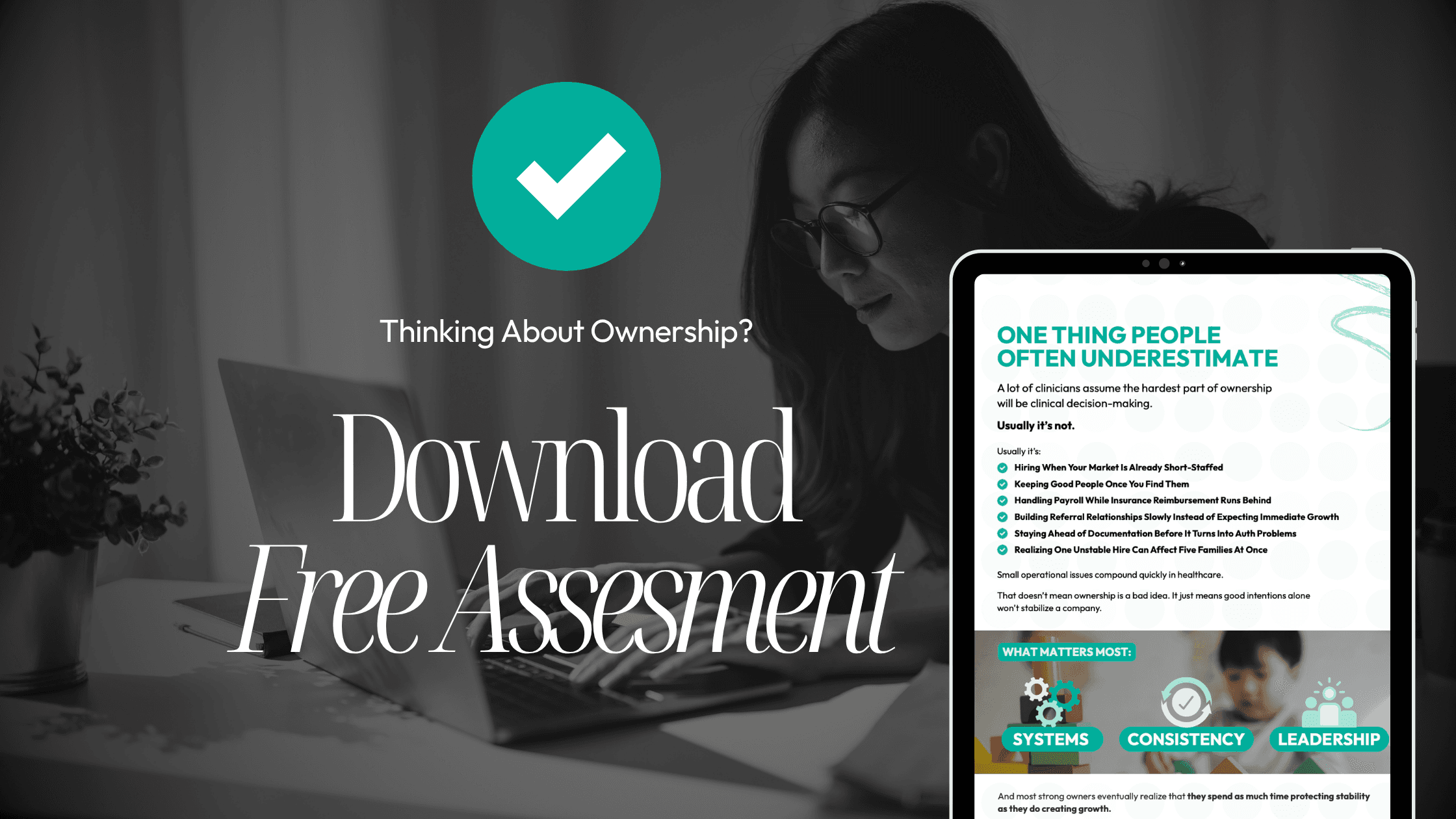
That's why Headstart Health created the BCBA Ownership Readiness Benchmark, a free resource designed to help clinicians evaluate their strengths, identify opportunities for growth, and better understand what it takes to become a practice owner.
Download Your Free BCBA Ownership Readiness Benchmark
What Makes a BCBA Ready for Practice Ownership?
There's no single career milestone that determines when someone is ready to become a business owner. Some BCBAs begin exploring ownership after years of clinical leadership, while others develop an interest much earlier in their careers.
Regardless of experience, the transition from clinician to practice owner requires a shift in responsibilities.
As a BCBA, your primary focus is typically on providing quality care, supporting clients and families, and supervising clinical staff. As a practice owner, those responsibilities expand to include managing business operations, developing employees, overseeing financial decisions, and establishing the systems that allow your organization to operate effectively.
Clinical experience provides an important foundation, but it doesn't necessarily prepare you for every aspect of running a business.
For example, you may be confident in your ability to develop treatment plans and supervise RBTs but have limited experience navigating insurance credentialing, managing payroll, or developing employee retention strategies.
That doesn't mean ownership is out of reach. It simply means there may be areas where additional education, experience, or mentorship would be beneficial.
Understanding those gaps before launching can help you approach ownership with more realistic expectations and a stronger foundation.
Get Your Free BCBA Ownership Readiness Benchmark and Podcast Access
Five Areas Every Aspiring ABA Practice Owner Should Evaluate
The BCBA Ownership Readiness Benchmark encourages clinicians to reflect on five areas that can influence their ability to successfully launch and manage an independent practice.
Clinical Leadership
Owning a practice means taking greater responsibility for the quality and consistency of clinical services. This includes supporting clinicians through complex cases, maintaining ethical standards, and making decisions that prioritize meaningful outcomes for clients and families.
Leadership and People Management
Practice owners are also responsible for building and supporting their teams. Hiring employees, providing feedback, addressing performance concerns, and creating opportunities for professional development all become part of the role.
Effective leadership requires more than clinical knowledge. It also requires communication, accountability, and a willingness to continually develop your own management skills.
Operational Readiness
Behind every ABA practice are administrative systems that keep services running. Insurance credentialing, billing, scheduling, documentation, compliance, and financial management all play important roles in maintaining a sustainable organization.
You don't need to become an expert in every operational function, but understanding how these systems work and where you may need support is essential.
Reputation and Community Relationships
Independent ABA practices often rely on strong relationships within the communities they serve. Building trust with families, referral partners, schools, and other local providers takes time and intentional effort.
Prospective owners should consider how they plan to establish their practice within the community and communicate the value of their services.
Personal Readiness for Ownership
Beyond clinical and operational responsibilities, it's important to consider whether ownership aligns with your current priorities.
Starting a business requires time, financial planning, adaptability, and the ability to make difficult decisions. Reflecting on your motivations, long-term goals, and capacity to take on additional responsibilities can help you determine whether now is the right time to pursue ownership.
The goal isn't to have every answer before you begin. It's to better understand what you're prepared for and where you may need additional support.
Get Your Free BCBA Ownership Readiness Benchmark and Podcast Access
Go Deeper with an Exclusive BCBAs Who Build Podcast Episode
Along with the Benchmark, you'll receive access to a private episode of BCBAs Who Build, featuring Dr. Sara Feldman and Breanna Holm.
In this conversation, Sara and Breanna take a closer look at the realities of practice ownership and expand on the areas covered in the assessment.
They discuss common misconceptions about entrepreneurship, the challenges new owners may encounter, and why strong clinical skills don't always translate directly into business leadership.
They also explore the importance of mentorship, developing confidence as a leader, and understanding your motivations before deciding to launch.
One particularly important consideration is the relationship between burnout and ownership. While the desire for greater autonomy may lead some clinicians to explore entrepreneurship, owning a business introduces an entirely new set of responsibilities. Understanding those demands is an important part of making an informed decision.
The episode offers additional perspective for BCBAs who want to explore ownership beyond the day-to-day responsibilities of clinical practice.
Find Out Where You Stand
Whether you're actively preparing to launch an ABA practice or simply curious about the possibility, taking time to evaluate your readiness can help you make more informed decisions about your future.
The BCBA Ownership Readiness Benchmark is designed to give you a starting point. By reflecting on your current skills, experience, and goals, you can begin identifying the steps that may help you move toward ownership.
When you complete the form, you'll receive free access to the Benchmark and the accompanying private podcast episode.
Get Your Free BCBA Ownership Readiness Benchmark and Podcast Access
At Headstart Health, we work with BCBAs who want to establish independent, clinician-led ABA practices. Through operational support, mentorship, and business guidance, we help clinicians navigate the responsibilities of ownership while keeping their focus on quality care.
Practice ownership isn't necessarily the right path for every BCBA, and it doesn't have to happen on a specific timeline. But if it's something you've been considering, understanding what the role requires is a worthwhile place to begin.
Is Owning an ABA Practice Right for You? Here's How to Find Out.
If you've ever caught yourself thinking, "If I were building this from scratch, I don't think I'd do it this way," you're not alone.
Many BCBAs eventually reach a point where they begin thinking beyond direct clinical work. Maybe you've watched operational problems affect the quality of care. Maybe you've become the clinician everyone turns to when difficult situations arise. Or maybe you're simply curious whether owning your own ABA practice could be the next step in your career.
The problem is that most conversations about entrepreneurship focus on the exciting parts—freedom, flexibility, and growth—while skipping over the realities of leadership, operations, and building a sustainable organization.
Practice ownership isn't just about becoming your own boss.
It's about creating systems that support clinicians, families, and quality care for years to come.
That's exactly why we created The BCBA Ownership Readiness Benchmark—a free resource designed to help clinicians honestly evaluate whether ownership is the right fit for them.