5 Ways BCBAs Can Build a Career That Actually Excites Them
Your BCBA certification can open more doors than you might think. Here's how to explore new opportunities, develop your leadership skills, and build a career that reflects what matters to you.
When you think about your career as a BCBA, what comes to mind?
Supervision? Treatment plans? Parent training? Clinical documentation?
Those responsibilities are important, but they don't have to define your entire professional identity.
One of the most exciting things about behavior analysis is how versatile the science can be. The skills you develop as a BCBA can help you become a stronger leader, explore entrepreneurship, create educational resources, and even build businesses outside the traditional ABA setting.
Just ask Marquii Jacobs, BCBA.
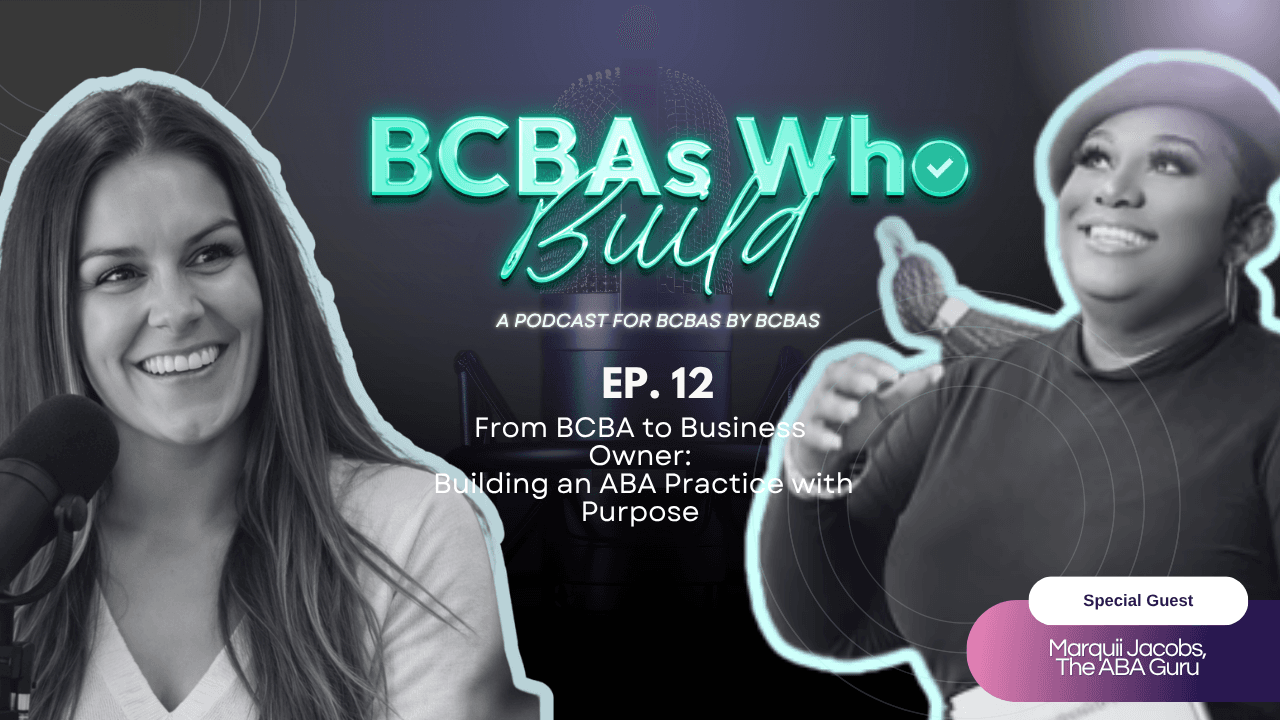
In a recent episode of BCBAs Who Build, Marquii joined Dr. Sara Feldman to discuss her journey as the ABA Guru, independent practice owner, Airbnb Superhost, and community advocate.
Her story offers an important reminder: Your career doesn't have to follow one predetermined path.
Here are five ways to think bigger about your career in behavior analysis.
1. Find Creative Ways to Use Your ABA Skills
Who says behavior analysis only belongs in a clinical setting?
The principles you use to understand behavior, develop skills, and evaluate progress can be valuable in many different environments.
For example, Marquii applies her background in ABA to her Airbnb business.
She uses guest feedback to identify areas for improvement, creates checklists to track progress, and makes environmental adjustments to help guests feel more comfortable.
She also thinks intentionally about inclusive hospitality, including how accommodations and advance communication can make travel more accessible for families with disabilities.
Try this: Think about one of your hobbies or interests outside work. Could your knowledge of behavior analysis help you improve a process, teach a skill, or solve a problem?
Whether you're interested in education, fitness, hospitality, or content creation, there may be opportunities to apply your professional skills in unexpected ways.
2. Stop Waiting Until You Feel 100% Ready
Let's talk about the endless planning phase.
You have an idea. You research it. You make a spreadsheet. You make another spreadsheet. You convince yourself you need one more certification, one more year of experience, or one more perfectly organized business plan.
Sound familiar?
One of Marquii's biggest lessons from entrepreneurship is that you don't need to have all the answers before getting started.
In her conversation with Dr. Sara Feldman, she explains how easy it is to delay an idea because you feel unprepared.
But waiting until every detail is figured out can keep you from making meaningful progress.
That doesn't mean jumping into a major business decision without preparation. It means recognizing the difference between necessary planning and waiting for perfect conditions.
Try this: Identify one small, low-risk action you can take toward a professional goal this month.
Maybe it's connecting with a mentor, researching a business idea, attending a workshop, or outlining a project you've been putting off.
You don't need to complete the entire journey today. You just need a reasonable first step.
3. Become the Leader You Wish You Had
Think about the supervisors and mentors who have made the biggest difference in your career.
Chances are, they did more than review your documentation or provide feedback.
They invested in your growth.
Marquii takes a similar approach to developing her team. Rather than viewing ambitious RBTs as potential competitors, she wants to help prepare them for future leadership opportunities.
Her vision includes giving team members experience with clinical decision-making, professional development, and even the business side of behavior analysis.
It's an approach built around a simple idea: Your success as a leader doesn't have to come at the expense of someone else's growth.
Try this: Find one way to create a meaningful development opportunity for someone on your team.
That could mean inviting an RBT to contribute ideas to an appropriate project, helping a supervisee explore career goals, or sharing a resource that helped you professionally.
Strong leadership isn't just about what you accomplish. It's also about the people you help develop along the way.
4. Build a Career Around Your Values
Sometimes, professional growth means moving into a higher position.
Other times, it means recognizing that the next promotion isn't necessarily the right next step.
As Marquii advanced through her career, she discovered that greater responsibility didn't always translate into greater influence over company culture or staff development.
That realization eventually helped inspire her decision to start an independent ABA practice.
But you don't have to become a business owner to learn from her experience.
Understanding your professional values can help you make better decisions about where you work, what opportunities you pursue, and how you want to grow.
Try this: Write down three things that matter most to you in your career.
Maybe it's clinical quality, mentorship, flexibility, community impact, creativity, or work-life balance.
Then ask yourself: Does my current role give me opportunities to prioritize these things?
If the answer is no, consider what changes might help you move toward a more fulfilling professional experience.
5. Look for Opportunities to Make an Impact in Your Community
Your professional influence doesn't have to stop when the workday ends.
For Marquii, community involvement is a major part of her identity as a behavior analyst.
From mentoring students at Savannah State University to advocating for stronger HBCU behavior analysis programs, she's passionate about creating opportunities for future clinicians.
She also sees her independent ABA practice as a way to serve families in the community where she grew up.
Her perspective highlights something worth remembering: The people who understand a community's needs are often well positioned to help identify opportunities for meaningful change.
Try this: Look for one opportunity to connect your professional skills with a local cause.
You might volunteer with a community organization, mentor a student interested in ABA, participate in a professional association, or help connect families with appropriate resources.
Small contributions can create meaningful connections and help you discover new ways to use your expertise.
Your BCBA Career Is What You Make of It
There's no single definition of a successful career in behavior analysis.
For some BCBAs, success means becoming an exceptional clinician. For others, it means mentoring future professionals, exploring new applications of ABA, starting a business, or becoming more involved in their community.
And for many, it can be a combination of all those things.
The important part is giving yourself permission to explore what a fulfilling career looks like for you.
You don't need to follow someone else's timeline or have every step planned out.
Stay curious. Keep learning. Invest in the people around you. And don't be afraid to explore opportunities that challenge your idea of what a BCBA career can look like.
Want More Career Inspiration?
In the latest episode of BCBAs Who Build, Marquii Jacobs, BCBA, joins Dr. Sara Feldman to share how she's combining behavior analysis, entrepreneurship, mentorship, and community advocacy to build a career with purpose.
From creating the ABA Guru to launching her own independent ABA practice and applying ABA principles to inclusive hospitality, Marquii's journey is full of ideas for clinicians who want to think beyond traditional career paths.
Watch the full episode of BCBAs Who Build on the Headstart Health YouTube channel.