Rethinking What a BCBA Can Do: A Conversation with Meg Jones
Leadership in ABA rarely follows a straight line.
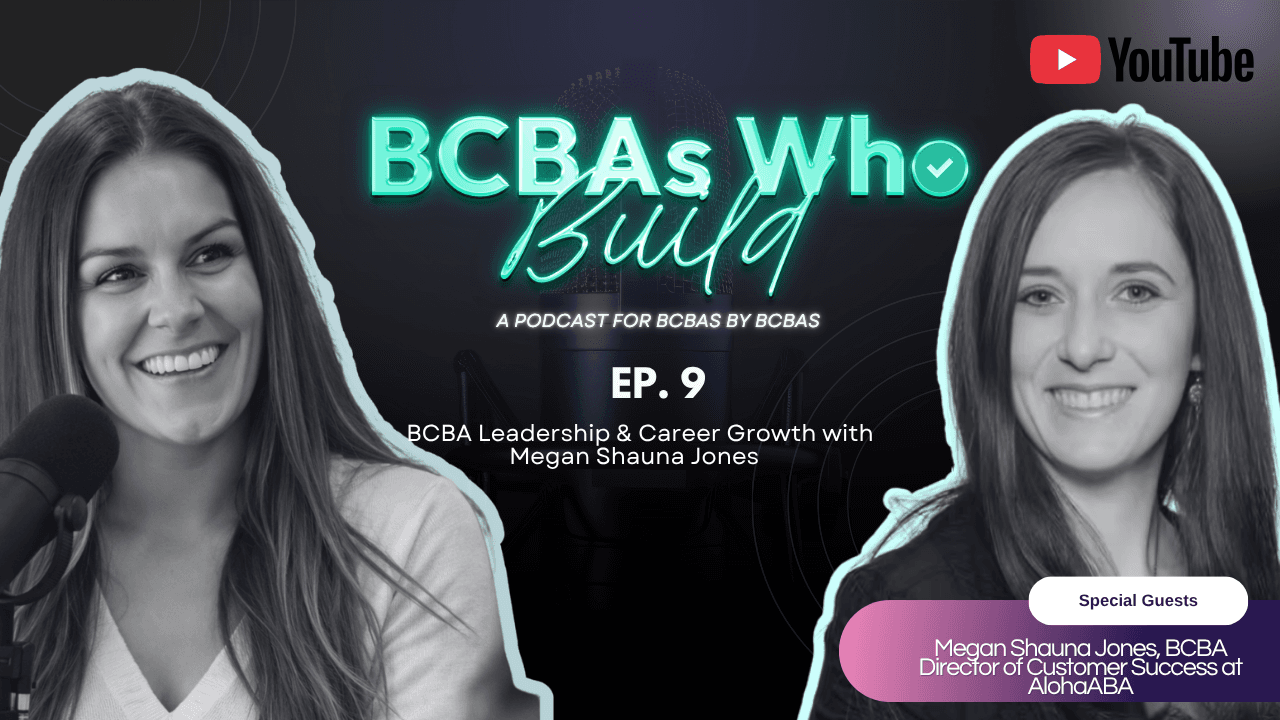
For Megan Shauna Jones, BCBA and Director of Customer Success at AlohaABA, it certainly didn’t.
Long before she was helping ABA organizations navigate technology, billing, operations, and practice management, Meg wanted to be an actress. Her eventual path into ABA would take her from running programs with her younger brother as a child to working clinically in Los Angeles, becoming a BCBA, supervising future clinicians, and eventually stepping into leadership.
Through each stage of her career, one lesson has become increasingly clear: good leadership isn’t about having all the answers. It’s about knowing when to ask for help, when to let someone else take the reins, and how to build a community where people aren’t afraid to admit what they don’t know.
We sat down with Meg to talk about her career, the leadership lessons she learned along the way, the realities facing BCBAs today, and why she believes the future of the field depends on collaboration rather than competition.
You originally wanted to become an actress. How did you end up in ABA?
Meg: I wanted to be an actress. That was my goal.
But I realized pretty quickly that I liked theater and doing plays with my friends, but I didn't like being competitive with friends. Throw me into a game or fantasy football and I will be competitive all day long. I don't want to beat my friend out for a job.
My little brother has autism. I grew up in the early '90s in a small town in Minnesota, and we didn't have any ABA agencies. There was no insurance mandate back then, so we had to fly in a BCBA to teach us how to do ABA.
My parents paid me a dollar an hour to do play programs with him. I was seven or eight and running ABA programs. That was my start.
I went to college thinking I was going to do film, acting, producing, and writing. After graduating, I started working as a second assistant and was making no money, so I got a job doing what would now be considered RBT work on the weekends.
Eventually, I realized I hated that Hollywood environment. I started doing more ABA, and when insurance mandates were starting in California, my company told me they wanted to promote me, but I needed to become a BCBA.
So I said, “Okay, I'll do that.”
You were handed a pretty significant caseload immediately after becoming a BCBA. What was that experience like?
Meg: I called my clinical director when I passed my exam. It was Halloween night. I said, “I just passed,” and she said, “Great, you're a supervisor now. I'll have a caseload for you in the morning.”
They passed me 14 cases immediately. I did not work there much longer. That didn't feel good.
Looking back at your early leadership roles, what would you do differently now?
Meg: The pieces of feedback I would always get were, one, you are not an island, and two, you don't have to know the answer to everything as soon as somebody asks it. It's okay to say, “I'll circle back on that.”
When I was in clinic meetings with my team or with parents, they would throw out questions and I felt like I had to create an intervention right then. They've told me about this new behavior, so I have to have an answer for it.
Now that I think about it, that's not good ABA. The best version is to think about things, come up with a treatment plan, do your research, and delegate. It's okay to not be the one doing everything.
A good leader is not doing everything themselves.
Was learning to delegate difficult for you?
Meg: Absolutely. I needed to learn to let go.
A lot of that came from supervising grad students, both in fieldwork and from the university perspective, and letting future BCBAs make mistakes.
If I let somebody take the reins on something, one of two things can happen. Either I'm wrong and it works out great, and then I learned something, or I'm right and we can use it as a learning opportunity for the person I'm supporting.
Trying to get ahead of everything isn't sustainable. That was my first experience being a leader: supervising grad students and RBTs and letting them take the reins.
That's how you build good leaders. Let them do stuff.
How do you help someone become more independent without making them afraid to ask questions?
Meg: I try to work in pieces. Show me a first draft, and then we'll realign on it.
When I was teaching people how to write treatment reports, I used the “see one, do one, teach one” model. The first time, I'm going to write the report out loud in front of you and talk you through my process. The next time, you're going to write the report in front of me.
I'll sit there quietly because I know you're going to have questions, and I don't want you to feel like you can't ask. That's a huge part of being a leader.
So many people are afraid to ask because they don't want to look stupid. Being the person who says, “There are no stupid questions. I'm so glad you asked me,” matters.
There are days when I forget how something works in Aloha. Absolutely. And I'll ask the entire group in front of everybody because it makes you vulnerable and shows that it's okay.
Do you think leaders need to be comfortable admitting when they don't know something?
Meg: I think that's a really important trait as a leader.
BCBAs want to know everything. We want to fix problems. We're little knowledge hounds. But showing that you don't know actually makes you feel approachable to your staff. It makes you feel approachable to parents. It makes you feel approachable to everyone around you.
Nobody likes a know-it-all.
What about when someone knows how to do something but doesn't have the confidence to do it independently?
Meg: “Take a stab” is my phrase. Take a stab and show me.
I think people get worried about the final product, so it's like, “I'll look at it first.” I also like having them show someone else. Again, see one, do one, teach one.
Having someone who is very capable of doing something but maybe doesn't have confidence move toward teaching can sometimes give them confidence in doing it. They realize how much they actually know when they're forced to answer questions from someone who knows less than they do.
Is giving corrective feedback difficult for you?
Meg: I think I'm actually worse at giving feedback to people when they're doing well. I've had to work really hard on that.
I tend to be the person who's like, “Yeah, you did your job.” But people do need to feel like they are good at their jobs. People do need to feel like they're accomplishing things. It shouldn't be corrective feedback all the time.
Whenever I think to myself, “They did really good at that,” I remind myself: I should tell them that. Don't keep that to yourself.
How have you tried to put that into practice with your own team?
Meg: We have a channel where we call out people's wins and things they're doing really well.
I take the time on people's work anniversaries and birthdays, or when they do something great and go above and beyond, to shout it from the rooftops.
If someone makes something great, I want them to show it off to the rest of the department. It's very easy for me to say, “Now we have this new thing that this person made.”
No. Let them show it off.
If you could give “Baby BCBA Meg” one lesson about leadership, what would it be?
Meg: Leadership is that community.
It's not being an island. It's not doing everything yourself. It's asking for help when you need it. It's saying, “I don't know, but I know someone who does.”
It's building those communities within your organization and outside of your organization.
We have the opportunity to be a hive mind. Do it.
We have so much technology available to us to be that hive mind. We can create documentation to share with other people. We can create CEUs. We can do a podcast.
Use each other. We all bring something to the table, so let's have a potluck.
Do you think competition gets in the way of that community?
Meg: It's not a competition. I don't win a prize for graduating when somebody else doesn't graduate.
The more BCBAs we have who are good and doing good work, the more people are getting help.
I came from Hollywood, where it was about trying to bring each other down and asking, “What can you do for me?” I don't like that.
This is a community game. We're all trying to save the world, so why can't we do it together?
What concerns you when you hear about BCBAs managing extremely high caseloads?
Meg: There are agencies out there that are worried more about billables, that are overassigning clients, and that aren't thinking about all the indirect time it takes to run these cases and the research you have to do, especially as a new BCBA.
If there are two BCBAs at an agency with 60 clients and one of them is brand new, who's her clinical director? Who's overseeing what she's doing?
I'm scared for the clients. I'm scared for her. I'm scared for the RBTs.
What kinds of questions should BCBAs ask when evaluating an organization?
Meg: There are very specific questions you can ask.
Is this the type of organization that tries to hold onto clients after they maybe should have graduated? What does your discharge rate look like? What do your discharge plans look like?
If they say, “We don't do that,” okay. That tells me a lot about an organization.
You can turn these things into conversations during an interview.
What should an ABA organization ask when evaluating software?
Meg: Get into the nitty-gritty with salespeople. If they don't know, then they don't know what they're selling.
When they're doing a demo, is it a video or are they showing you a real site and exactly what it can do? If they're just showing you a video and can't click into something, then you don't know what you're getting.
Ask about ongoing support. What happens in six months, not during my initial trial period? What happens if I have a problem in six months? Who's going to help me?
That's my biggest question.
Finally, what do you give BCBAs permission to rethink?
Meg: I give you permission to rethink what a BCBA can do.
We can do anything. We build systems. That's what we do.
And any system that needs to be built, you can build it.
Hear the Full Conversation
There’s much more to Meg and Sara’s conversation, from navigating BCBA burnout and evaluating organizational red flags to building community within the field and choosing technology that can actually support a growing ABA practice.
Listen to the full episode of BCBAs Who Build on YouTube or visit headstart.health/podcasts to explore this episode and more conversations with leaders across the ABA community.
Simplify the Business Side of ABA with AlohaABA
Building and growing an ABA practice means managing a lot more than clinical care. From scheduling and authorizations to billing, payroll, data collection, and reporting, the right systems can make a major difference in how efficiently a practice operates.
AlohaABA is a cloud-based practice management and electronic medical records (EMR) platform built specifically for ABA therapy providers and autism clinics. By bringing clinical and administrative workflows together in one centralized system, AlohaABA helps providers spend less time managing disconnected processes and more time focused on their teams, clients, and quality of care.
With tools for scheduling, billing and invoicing, authorization management, payroll integration, clinical data collection, and operational analytics, AlohaABA is designed to support ABA practices as they grow.
Want to learn more about AlohaABA and how it can support your practice? Visit AlohaABA.com.